
WELCOME BONUS 200%
UP TO €1500 + 200
FREE SPINS
UP TO €1500 + 200
FREE SPINS
Home → Games
Casino games at BC Game
When to Surrender 16 vs 10?
Blackjack offers a specific strategic decision when a player holds a hand totaling 16 against the dealer's 10. Late Surrender, a rule present in some variants, allows a player to forfeit half their bet after the dealer checks for blackjack. This rule, while rare in its 'early' form, improves a player's theoretical return to player (RTP) by approximately 0.08 percent points.
The mathematics behind the Late Surrender option is based on statistical probabilities of the dealer's hand. By relinquishing the bet in unfavorable situations, a player minimizes potential losses. This contrasts with the 'early surrender' rule, which is significantly more advantageous, potentially improving RTP by up to 0.6 percent points but is exceptionally uncommon in online play.
For a player considering this maneuver, the consequence is a direct reduction in the house edge on that specific hand, impacting eligibility for optimal outcomes. The refund is precisely 50% of the initial wager, a concrete monetary adjustment based on a defined rule set for specific card combinations and dealer upcards.
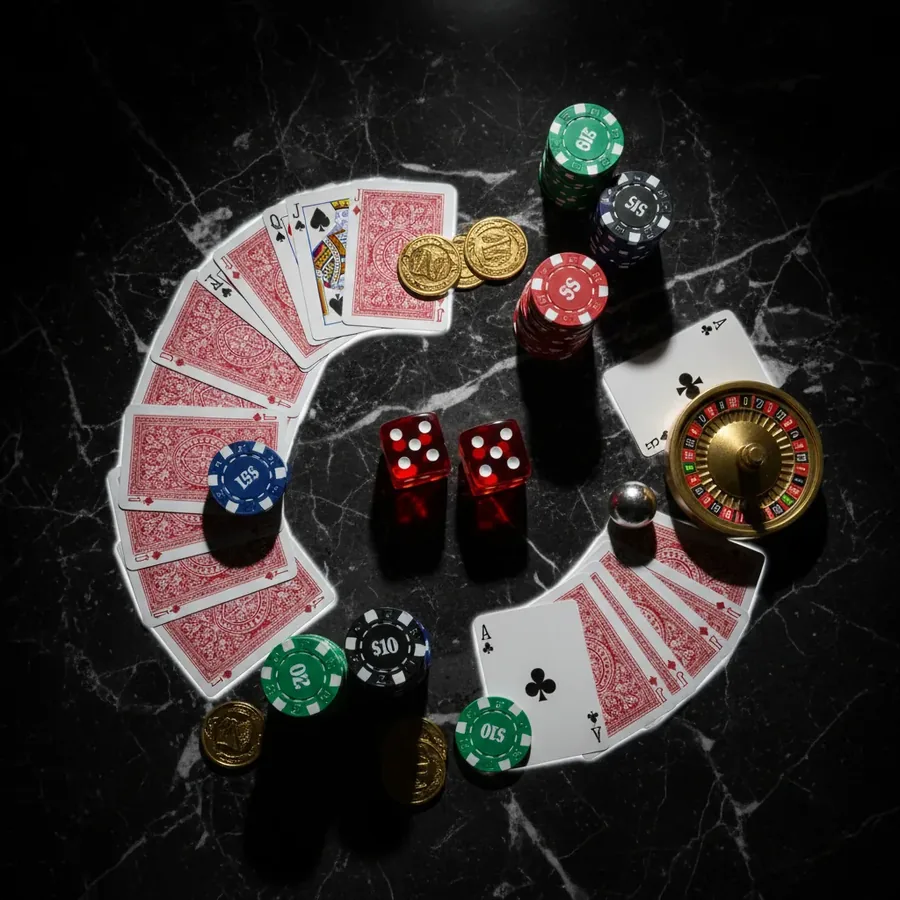
37 vs. 38 Sectors: What the Double Zero Costs
French Roulette, when played without the La Partage rule for inside bets, features a wheel with 37 sectors. The house edge on these inside bets, such as Straight bets paying 35:1, remains at 2.70%. This means that, on average, for every €100 wagered on inside bets, €2.70 is retained by the house over the long term.
In comparison, a roulette wheel with a double zero, typical in American Roulette, contains 38 sectors. The stated RTP of 97.30% for French Roulette's inner bets reflects this 2.70% house advantage.
The consequence for a player wagering on inside bets in this French Roulette variant is a fixed disadvantage. For instance, a Straight bet, which pays 35 to 1, is subject to the 2.70% house edge, meaning the expected return is less than a full payout of the odds wagered. This edge applies uniformly across all inside bet types like Splits (17:1), Streets (11:1), and Corners (8:1).
Hold or discard five cards: the decision
In Video Poker variants like Deuces Wild, a crucial decision point arises with the 'Not So Ugly Ducks' (NSUD) paytable, offering an RTP of 99.73%. The strategic complexity involves deciding which of the initial five dealt cards to hold and which to discard for a potential redraw, aiming to form the strongest possible hand according to the paytable's listed payouts.
Optimal play in Deuces Wild NSUD, with a house edge of 0.27%, requires adherence to specific strategy charts. For example, holding a pair of Deuces (a wild card) when dealt Five of a Kind (paying 16 for the hand) is part of the strategy, demonstrating the importance of understanding card combinations and their respective values. This contrasts with the 'Full Pay' version, which has an RTP of 100.76% and a negative house edge of -0.76% with optimal play.
The consequence of making incorrect hold/discard decisions in Deuces Wild NSUD is a direct reduction in the RTP, moving it further away from the theoretical maximum. For instance, deviating from optimal strategy can shift the advantage away from the player, impacting the long-term financial outcome of sessions played at this game.
Baccarat in three steps: bet, reveal, compare
Baccarat offers distinct betting options, with the Tie bet having a stated RTP of 95.16%, resulting in a house advantage of 4.84%. This bet, typically paying 9:1, presents a significantly higher house edge compared to the Banker or Player bets, which are subject to commission and a much lower house edge.
The Banker bet in Baccarat, when employing an 8-deck shoe with a 5% commission, yields an RTP of 98.94%, creating a house advantage of just 1.06%. This makes it the most favorable bet within the game, with an effective payout of 0.95:1 on winning bets after the commission is applied. This contrasts sharply with the Tie bet's 4.84% disadvantage.
For players engaging with the Tie bet, the consequence is an increased likelihood of losing money over time due to the higher house edge. While online casinos often feature the 9:1 payout for a Tie, which is an improvement from higher odds, it remains a statistically unfavorable option compared to the standard Banker or Player wagers. The decision to bet on a Tie directly influences the player's long-term eligibility for positive returns.
Dozen 2:1 Hits 12 of 37 Numbers
In French Roulette, bets on dozens, such as the first, second, or third dozen, pay at odds of 2:1. These bets cover 12 numbers each out of the 37 total sectors on the wheel. The stated RTP for these inside bets, when La Partage does not apply, is 97.30%, indicating a house edge of 2.70%.
When a player wagers on a specific dozen, they are essentially betting on one of three distinct groups of numbers. Each dozen bet covers 12 potential winning outcomes out of 37 possible outcomes on the wheel. This is in contrast to a Straight bet, which covers only a single number but pays significantly higher at 35:1.
The consequence of placing a dozen bet in this French Roulette variant is that for every €100 wagered, an average of €2.70 is expected to be retained by the casino due to the house edge. This applies regardless of which of the three dozens is chosen, as the payout structure and number of sectors covered remain consistent for all dozen bets.
Game categories at a glance
| Category | Examples | Stakes From | Highlight |
|---|---|---|---|
| Slots | Gonzo's Quest, Diamond Mine Megaways, Midas Golden Touch | 0,10 EUR | thousands of titles |
| Table games | Roulette, Blackjack, Baccarat | 0,50 EUR | classic rules |
| Live casino | MONOPOLY Live, Ultimate Roulette | 0,20 EUR | real dealers |
| Jackpot games | Mega Moolah, Divine Fortune, Age of the Gods | 0,20 EUR | progressive pools |
| Instant games | Aviator, Plinko, Mines | 0,10 EUR | fast rounds |
| Video poker | Jacks or Better, Deuces Wild | 0,25 EUR | strategy based |
100 EUR bet, 50 rounds: the expected value
A 100 EUR bet placed over 50 rounds on games with a 10% contribution to wagering requirements means that 500 EUR of each 100 EUR bet counts towards the 300% welcome bonus up to €2,000, requiring a total turnover of €4,000. For instance, a 100 EUR bet on a slot game (100% contribution) will count as 100 EUR towards the wagering requirement.
Considering a 100 EUR bet on Baccarat Banker, which has a 1.06% house edge and a 0.95:1 payout for a 5% commission, the expected loss per bet is 1.06 EUR. This means over 50 rounds, the expected loss would be 50 EUR, illustrating the mathematical disadvantage inherent in casino games.
The wagering requirement for the €2,000 bonus, at 40 times the bonus amount, translates to €80,000 in turnover. With a 10% game contribution from table games like Baccarat, each 100 EUR bet only contributes 10 EUR towards this massive requirement, effectively increasing the necessary rounds to meet it.
37 vs. 38 Sectors: One Zero Difference
French Roulette, featuring 37 sectors including a single zero, offers a house edge of 2.70% on inside bets when La Partage is not applied. This contrasts with American Roulette, which typically includes both a zero and a double zero, resulting in 38 sectors and a significantly higher house edge.
When La Partage is applied to even-money bets in French Roulette, the house edge is reduced to 1.35%. This rule dictates that half of the stake is returned on even-money bets if the ball lands on zero, effectively halving the house advantage for those specific wagers.
The presence of a single zero in French Roulette is a key factor in its lower house edge compared to variants with a double zero. This means that for every 100 EUR wagered on even-money bets with La Partage, the theoretical average retention by the casino is 1.35 EUR.
Why the Double Zero Almost Doubles the House Edge
A standard roulette wheel with 37 sectors, like European Roulette, has a house edge of 2.70% on inside bets. The inclusion of a single zero creates a specific payout structure that results in this mathematical advantage for the casino over the long term.
Introducing a second zero, as seen in American Roulette with its 38 sectors, directly increases the number of outcomes where the house wins on even-money bets. This effectively doubles the house's winning opportunities without a corresponding increase in payouts for standard wins.
The house edge on American Roulette, due to the double zero, rises to approximately 5.26%. This is nearly double the 2.70% edge found on European or French Roulette wheels without the double zero, making it a less favourable game for players.
French Roulette: La Partage Lowers to 1.35 Percent
French Roulette, when employing the La Partage rule on even-money bets, reduces the house edge to 1.35%. This rule specifically benefits players by returning 50% of their stake when the outcome is zero on bets like Red/Black, Odd/Even, or High/Low.
The standard house edge for inside bets in French Roulette, without the La Partage rule, is 2.70%. This is comparable to European Roulette, as both feature a single zero on the wheel and a standard payout structure for various bet types.
The 1.35% house edge achieved with La Partage on even-money bets makes French Roulette one of the most player-friendly roulette variants available. For example, a 100 EUR bet on Red with La Partage in play would result in an expected loss of only 1.35 EUR if zero hits.
Three Roulette Variants, Three House Edges Compared
European Roulette, with its single zero and 37 sectors, presents a house edge of 2.70% for inside bets. This figure represents the average percentage of each bet that the casino expects to retain over an extended period of play.
American Roulette, featuring both a single zero and a double zero, increasing the total sectors to 38, exhibits a significantly higher house edge of approximately 5.26%. This amplified edge is a direct consequence of the additional winning opportunity for the house.
French Roulette, when utilising the La Partage rule for even-money wagers, offers the lowest house edge of the three at 1.35%. This reduction is achieved by returning half the stake on zero outcomes, making it a more favourable option for players seeking better odds.
RNG Roulette vs. Live Table: Four Clear Differences
When comparing RNG Roulette to live table variations, the French Roulette with La Partage rule offers a defined house edge of 1.35% on even-chance bets, with half the stake returned on a zero outcome. This rule applies specifically to even-chance bets such as Red/Black, Odd/Even, and Low/High. The consequence for the player is a reduced theoretical loss over extended play compared to tables without this feature.
In contrast, standard French Roulette, where La Partage does not apply to inside bets, presents a higher house edge of 2.70%. This is due to the absence of the concession offered by La Partage or En Prison rules on the majority of wagers. Players will observe a greater average retention of stakes by the house on internal wagers like Straight bets at 35:1.
The mathematical difference between these roulette types directly impacts player retention. For instance, the 1.35% house edge on French Roulette with La Partage is significantly lower than the 4.84% house edge on Baccarat Tie bets, highlighting the advantage of rules that mitigate losses on zero outcomes. This means over many spins, a larger portion of wagers is theoretically returned to players.
Blackjack Insurance, a side bet with a house edge of 7.47% for 6-8 decks, showcases a substantial deviation from favourable game mathematics. This bet, typically offered at 2:1, is often advised against by basic strategy, except in specific card-counting scenarios where the true count is +3 or higher.
Punto Banco: 5 Percent Commission on Banker Wins
Punto Banco, a variant of Baccarat, features a commission structure on Banker wins, typically set at 5%. This commission effectively reduces the payout on a Banker win from 1:1 to 0.95:1, representing a 5% deduction. This is a standard feature designed to balance the game's odds, as the Banker hand statistically has a slight advantage.
The house edge associated with the Banker bet in Baccarat, accounting for the 5% commission on a 5% commission basis, is 1.06%. This makes the Banker bet the most favourable wager within the game, with a standard deviation of 0.93. Compared to the Tie bet's 4.84% house edge, the Banker bet offers a significantly better return.
When considering the welcome bonus of 300% up to €2,000 plus 100 free spins, the contribution of Baccarat to wagering requirements is crucial. As Tischspiel-Mathematik indicates, Tischspiele contribute 10% to bonus turnover. Therefore, a €100 wager on the Banker bet would count as €10 towards the €4,000 turnover required for a €100 bonus at a 40x wagering rate.
Straight, Split, and Corner in direct comparison
In French Roulette, a Straight bet, wagering on a single number, pays 35:1. This offers a high potential payout but also a lower probability of winning. The RTP for inner bets in French Roulette, excluding La Partage, is 97.30%, leading to a house edge of 2.70%.
A Split bet, covering two adjacent numbers on the roulette layout, pays 17:1. This bet type offers a more balanced risk-reward profile than a Straight bet. The inclusion of La Partage on even-chance bets does not affect the payout ratios for inside bets, maintaining a consistent house edge on these wagers.
The Corner bet, placed on four numbers that meet at a corner, pays 8:1. This represents a further reduction in the payout multiplier compared to Straight and Split bets. The house edge remains at 2.70% for all inner bets when La Partage is not applicable to them, ensuring consistent game mathematics across these bet types.
Baccarat commission: 5 percent on each Banker win
The Banker bet in Baccarat, utilizing 8 decks and a 5% commission, has a house edge of 1.06%. This commission is applied to winning Banker bets, effectively reducing the payout from a standard 1:1 to 0.95:1. This mechanism is in place to offset the statistical advantage the Banker hand typically holds.
For comparison, the Tie bet in Baccarat, even with an increased payout of 9:1, carries a significantly higher house edge of 4.84%. This demonstrates that despite the attractive payout, the Tie bet is mathematically less favourable to the player than either the Banker or Player bets in the long run.
When evaluating the 300% welcome bonus up to €2,000 plus 100 free spins, the wagering contribution is key. A €100 bet on the Banker bet in Baccarat, contributing 10% to wagering, would count as €10 towards the turnover requirement. For example, a €4,000 turnover requirement would necessitate €40,000 in Baccarat bets.
En Prison on Zero Gives Second Chance
The 'En Prison' rule, applicable to French Roulette, offers a second chance on even-chance bets when the ball lands on zero. In this scenario, the player's stake is 'imprisoned' and carried over to the next spin, rather than being immediately lost. This rule is specifically for even-chance wagers like Red/Black, Odd/Even, and Low/High.
The 'En Prison' rule, similar to 'La Partage', results in a reduced house edge of 1.35% for applicable bets. This is because it provides a mechanism for players to potentially recover their stake on a zero outcome, unlike tables where the stake is lost outright. This rule is exclusively for bets with 1:1 payouts.
The mathematical impact of 'En Prison' on French Roulette's house edge is substantial. While internal bets in French Roulette without 'La Partage' have a house edge of 2.70%, the application of 'En Prison' on even-chance bets lowers this to 1.35%. This makes it a strategically advantageous rule for players focusing on these bet types.
Contact
Live - online chat
Banking









Providers












BC game 2024